Traeger, Inc. is a Salt Lake-based company that sells wood pellet grills and accessories. It was founded by Joe Traeger, who invented and patented the wood pellet grill in 1987. Joe later sold the company to an investment firm, and the company was taken public in 2021 under the ticker symbol COOK. Today, Traeger still primarily sells wood pellet grills, but they now also sell gas griddles as well as grill accessories and consumables such as pellets, rubs, and sauces. Traeger remains the category leader in wood pellet grills to this day, and their products are generally seen as high-quality and reliable.
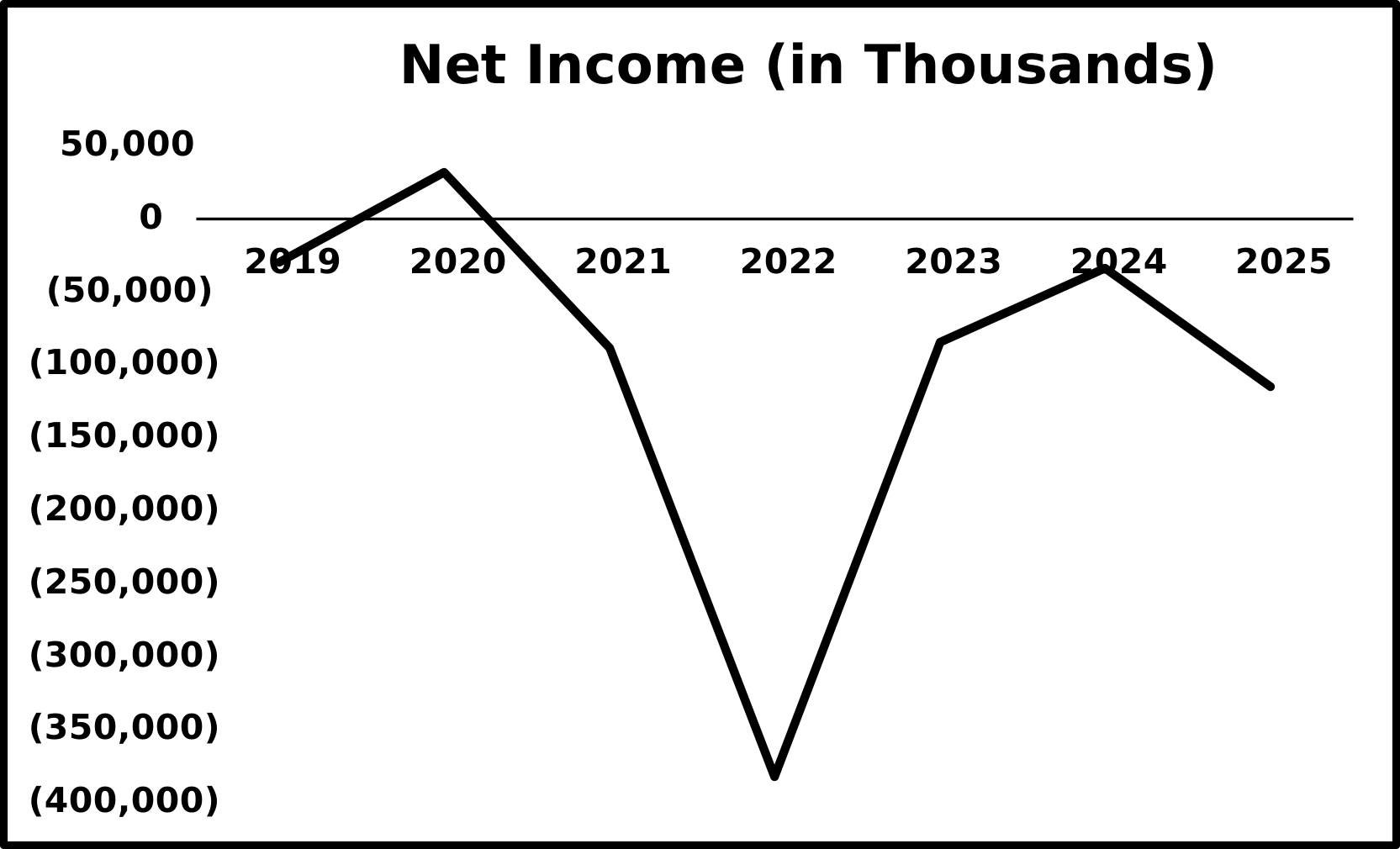
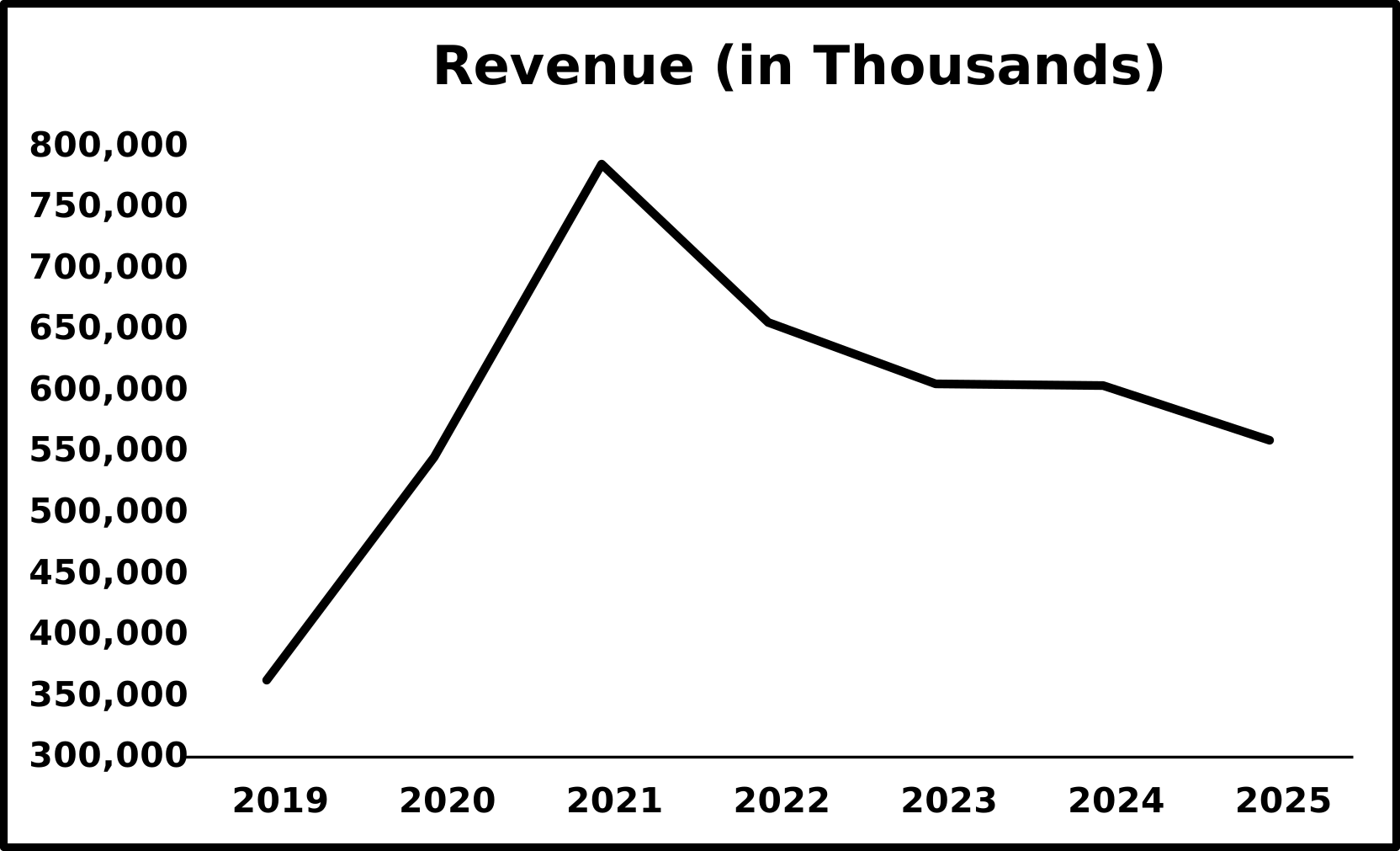
Traeger had its IPO in July of 2021 at a share price of $1,100, adjusted for the recent reverse stock split. Since then, the stock has lost over 94% of its value and currently sits at $64.04 as of close on 6/11/26. To understand why this happened, I turned to the financial information publicly available. In 2020, the most recent full year of data at the time of the IPO, the company made net income of $31.6 million. Since then, they have had a net loss every year for a total loss of $702 million in just over 5 years. In comparison, the current market value of the company is just over $178 million. Their revenue peaked in 2021 at $786 million and gradually decreased to just under $560 million in 2025. Presumably, these two are some of the main factors in the stock price decline.
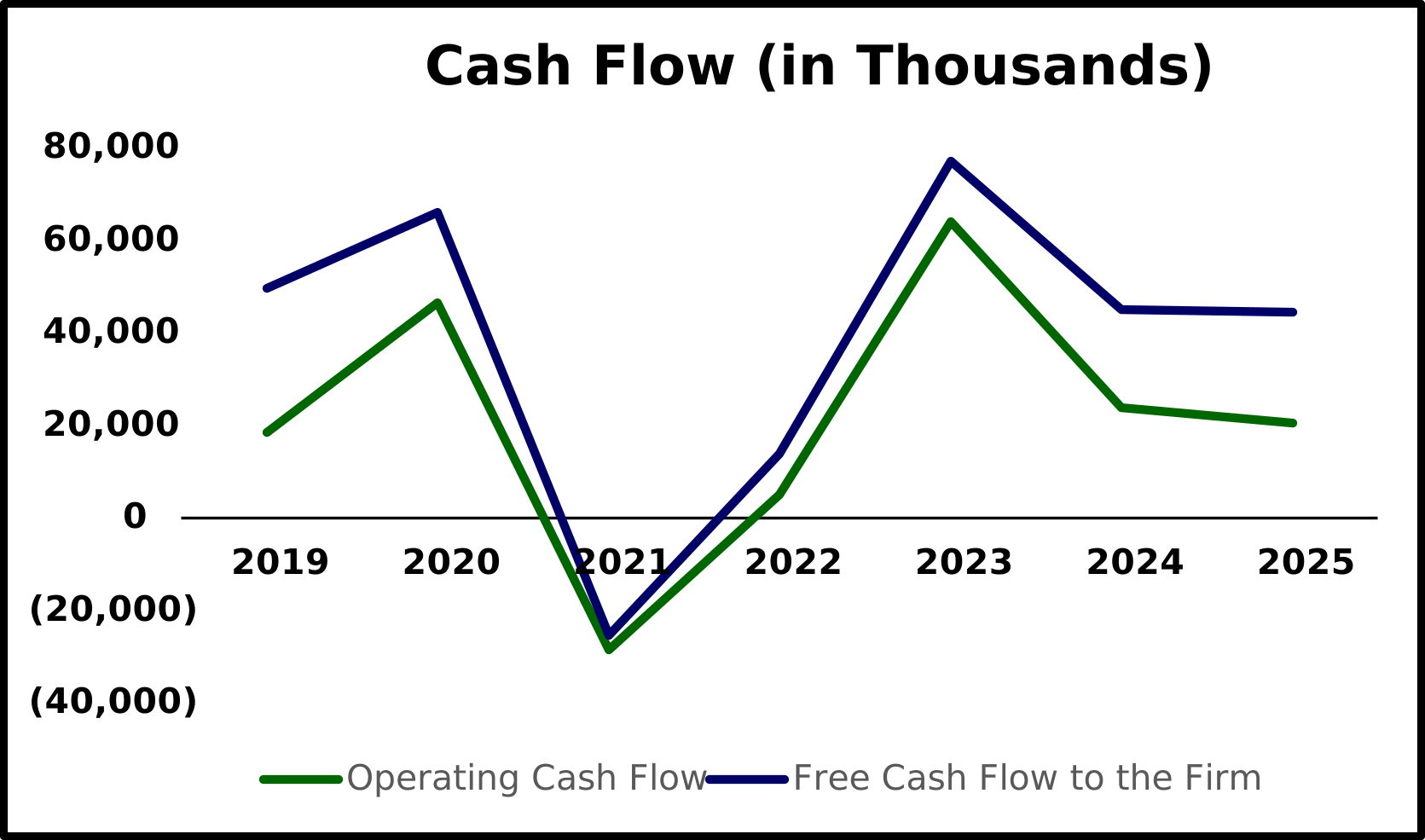
While net income has been negative for the past several years, Traeger's cash flow numbers have looked relatively solid. Since 2019, they have had positive operating cash flow and free cash flow to the firm each year besides 2021, averaging $21 million in OCF and $39 million in FCFF per year.
The reason for the discrepancy between profitability and cash flow is the large amount of non-cash expenses that Traeger incurs each year. The largest reason for the net loss of $115 million in 2025 was a $75 million write-down of goodwill. This is a one-time expense as the goodwill is now at $0 on the balance sheet and can't be written down any further. Of the recurring non-cash expenses, the vast majority are stock-based compensation, depreciation, and intangible asset amortization.
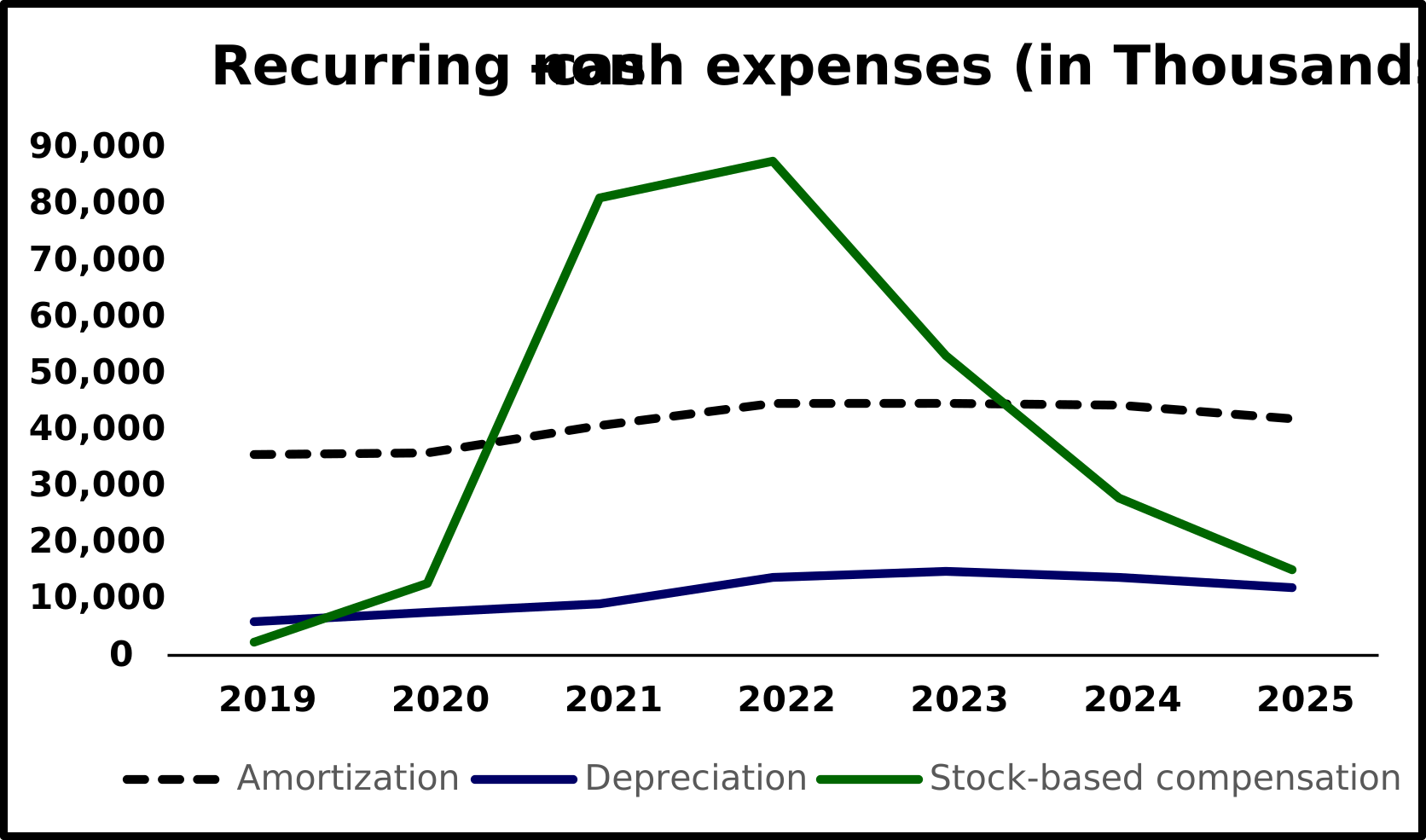
While non-cash expenses should not be ignored, this specific intangible asset amortization does not worry me since it represents a large, one-time cash expenditure in the past that is being spread over time. The amortization is the result of business combinations that happened in 2017 and 2021. If we were to remove the amortization as well as the goodwill write-down from the 2025 income statement, the company would have posted a net-profit of $1.5 million, excluding tax effects. The stock-based compensation is a more tangible, current expense in my opinion because it directly results in dilution to current shareholders if/when vesting occurs. Depreciation is also more of an ongoing expense because the PP&E will need to be replaced periodically.
Traeger's leverage ratios have increased over the past few years, with financial leverage (assets/equity) growing from 2.0x in 2021 to 3.9x in Q1 2026. This is mostly due to goodwill write downs which have decreased their asset values. In fact, Traeger has been paying down debt over the last few years thanks to positive cash flow. In 2023, 2024, and 2025, they paid down $84 million and now have no outstanding balance on their line of credit. They can use their cash flow in the coming years to pay down the long-term loan of which they currently have ~$400 million outstanding, 60% of total book asset value and 140% of tangible book asset value. In the Q4 2025 earnings call, CFO Joey Hord mentioned that they plan to use cash flow to pay down debt in order to maintain balance sheet health and remain within debt covenant levels.
In a recent investor presentation, Traeger laid out 4 key pillars of growth: Accelerate brand awareness, disrupt outdoor cooking with product innovation, drive recurring revenues, and expand Traeger brand globally. In March of 2025, Traeger hired a new CFO, Joey Hord. In May of 2025, they initiated a new restructuring plan called Project Gravity. The project is currently projected to cost $32-36 million in total and save $64-70 million per year after completion. These savings will help improve profitability, especially if they can combine them with revenue stabilization or increases. If they can increase revenue, they will accelerate this turnaround and if revenue deteriorates, they will continue to lose money without a more drastic restructuring. In the Q4 2025 earnings call on March 5, CEO Jeremy Andrus announced that Traeger would be introducing two new products in Q2 of 2026, both priced below $1,000. He mentioned that the company has seen greater penetration with products below this threshold, and that consumers are currently prioritizing cost effectiveness while maintaining quality. On April 14th, the company announced the new Westwood Series, a series of grills that starts at $700. Two weeks later, they announced the Irontop Series, a gas-powered griddle starting at $500. Traeger is known for quality grills but has historically offered products that are above the budget for many. Introducing these new products at a lower price point could help attract customers who would have previously opted for a more affordable brand.
The company released their 2025 10-K and had their earnings call on March 5. Revenue came in above the expectations that had been set, and adjusted EBITDA came in around the upper half of the expectation range. However, over the next two days of trading, the stock plummeted from around $38.5 per share to $26.95 per share (both adjusted for the subsequent reverse stock split). This market activity was most likely a reaction to the guidance the company announced for FY 2026. The revenue forecast is between $465 and $485 million for the full year. This would be between a 13.4% and a 17% decline in revenue from 2025 to 2026. While this is a significant drop, leadership emphasized on the earnings call that much of this revenue decrease is due to strategic decisions they made including exiting their Costco roadshow program, ending their direct-to-consumer channel, and transitioning to a distributor model in Europe. These decisions were made to streamline operations and increase profitability. Aside from these strategic choices, leadership also attributed the revenue decline to tariffs, general economic weakness, and elasticity of demand. Despite these reasons, the market didn't react well to the earnings announcement. Weeks later, after the announcement of the Westwood and Irontop grill series, the stock rebounded back up above $40.
Traeger's Q1 results came in on May 11th. They posted revenue of $94 million, which was right in the middle of their guidance range of $92-97 million. Adjusted EBITDA came in at $17.3 million, exceeding the $3-7 million guidance range set for Q1. Gross margin for Q1 was 45.7%, above the 2026 guidance range of 38-39%. In addition, net income came in at just under $3 million, the company's first quarterly net income since Q1 2021. These numbers are great at first glance but a deeper look shows that the results are a bit more mixed. The company reduced cost of revenue by $12.4 million due to tariff refunds they are expecting to receive as a result of the IEEPA Supreme Court ruling earlier this year. Removing the effect of the refunds, gross margin would have been 32.6%, which is well below the guidance range. Management cited 'timing of trade spend, lower mix of direct import sales, tariff-related costs and MEATER fixed cost deleverage' as reasons for the lower gross margin. They adjusted their gross margin guidance up to 39.5-40.5% for the full year, implying that they expect the margin to rebound to near the original 38-39% estimate for the remaining 3 quarters of the year. Traeger also recognized $11.6 million in income for an employee retention tax credit under the CARES Act. With both payments, assuming the tariff refunds are received, the company will have an additional ~$27 million of cash that could be used to pay down debt or reinvest in the business. However, we should recognize these as one-time payments and look at what the results would have been without them. Removing the effect of these two items, adjusted EBITDA for Q1 would have been around $5 million, in the middle of the original guidance range, and net loss would have been around $21 million. In Q2, I will be paying special attention to whether they continue to meet revenue guidance, if gross margin rebounds, and whether they use their free cash flow to pay off debt.
See the below trailing-twelve-month valuation ratios as of close on 6/11/26:

Traeger comes in below the TUI index median in all 3 metrics shown. Price to earnings is not included here because Traeger has negative TTM earnings. In my opinion, the market is undervaluing this stock primarily due to factors including the history of losses since the IPO, the downward revenue trend, and hesitations about the macroeconomic outlook going forward. Since Traeger is in a cyclical sector, they are more affected by economic weakness than some companies. These are valid concerns about the economy and the company. At the same time, the low stock price provides an advantageous entry point to investors who believe in the company's future. There is room for this stock to grow if they are able to execute their vision successfully.
My final thoughts on the outlook for this company and stock are the following. On one hand, they have had negative net earnings for a long time, and revenue continues to decline. Their 2026 revenue expectations represent a significant drop from 2025 which is concerning even if you accept their claims that this is due to strategic consolidation. In addition, there is a lot of economic uncertainty right now, and Traeger operates in a cyclical sector that could be especially affected by negative trends in consumer spending. On the other hand, the restructuring plan they are working through will improve their profitability and help them adjust to this lower level of revenue. The introduction of new, more affordable grill models could also help them adapt to lower consumer spending power and increase sales. While they have lost money on paper almost every year, they have had positive cash flow which has helped them pay off their line of credit and get to a point where they can now begin paying off their long-term debt and saving money on interest. Finally, the stock is priced low relative to its fundamentals and could be seen as an attractive entry point for new investors who believe in the company's long-term success. I am currently invested in this stock with under 5% of my portfolio. Please don't take this article as investment advice - do your own research before making any investment decisions. Read my notes page for a description of my investment process.